Category: Cameras

Utrpení tříbí charakter — a když si hodíte na bedra tyto stroje, charakter z vás bude přímo prýštit. Pot teda taky. Možná i slzy. Titáni vyvanulých časů důstojně čnící nade vší fototechnikou dneška a kolosy lámající stativy a páteře těch, co je nosí.

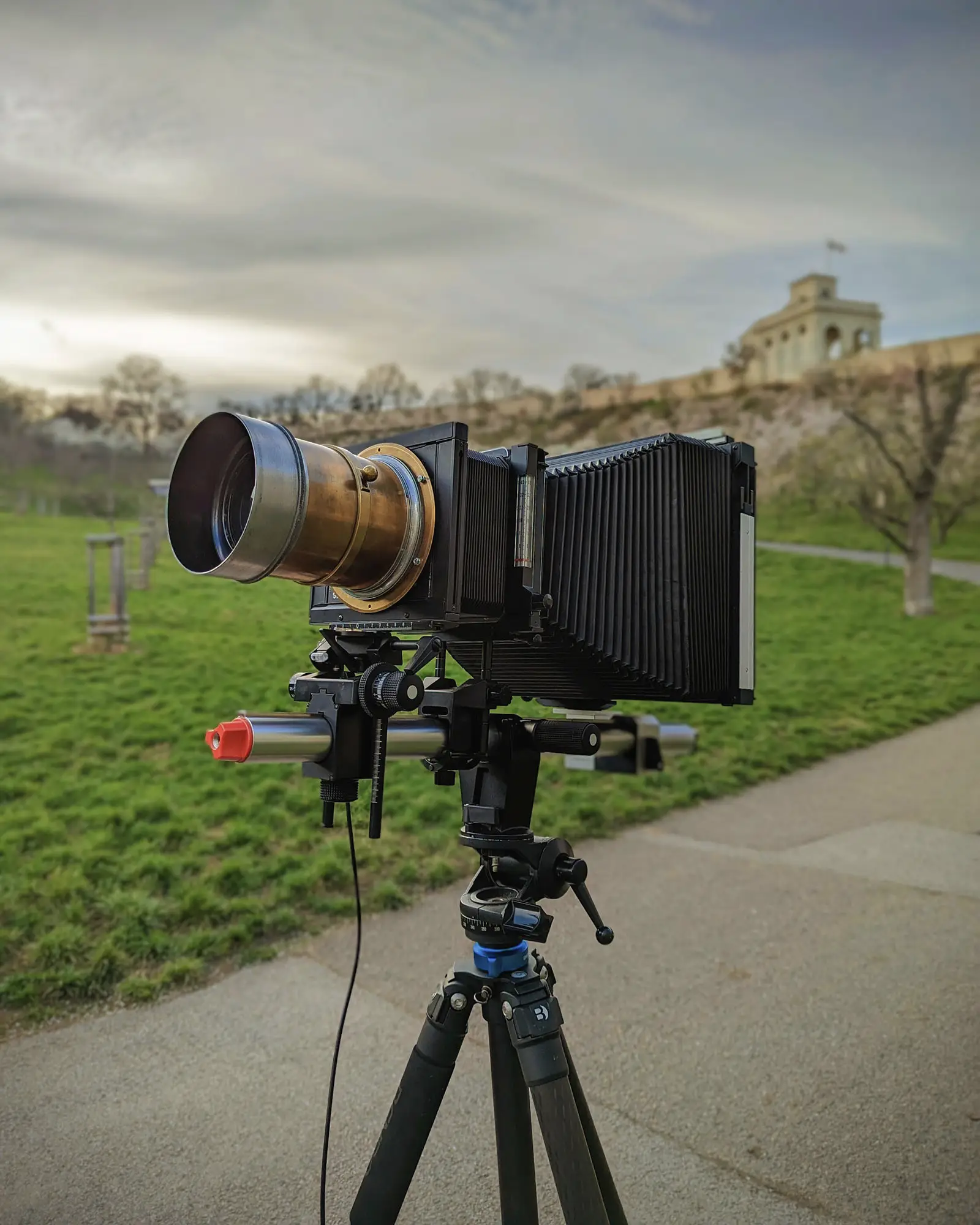
  • Sinar S1

    Sinar S1

    Značka Sinar je synonymem švýcarské preciznosti a spolu s Arca Swiss a Alpou patří do fotografické triquetry a svaté trojice velkoformátových aparátů ze země zubatých železnic a rozteklýho sýru. Slovo je akronymem pro „Still, Industrial, Nature, Architectural and Reproduction photography“.

    • The birth of Sinar dates back to 1879, when Carl August Koch finally found himself in the best art in the world, photography of course.
    • Je to k nevíře, ale všechny tři firmy stále existují a věnují se stále stejnému řemeslu, tzn. produkci špičkové fotografické techniky, optiky a související veteše. A jedno mají stále společné – abyste si od nich mohli něco pořídit, musíte prodat babičku, dědečka, po jednom z každého párového orgánu a registrovat se na OnlyFans.
    • Pojem „švýcarská svatá trojice“ se obvykle vztahuje ke třem neotřesitelným pilířům jiného odvětví – hodinářství. Označuje tři nejdůležitější tradiční firmy – Patek Phillipe, Audemars Piguet a Vacheron Constantin. Pro pořízení hodinek z jejich portfolia platí to co výše, jen musíte přihodit ještě mámu s tátou.

    Main focus of Sinar has always been on large-format optical bench cameras, mostly used in studios or architectural photography, where their full potential can be used through their movements. You can find out what is a field camera and what is a monorail in my previous article, I offer a basic excerpt below.

    • Pojmem „pohyby“ se rozumí vychylování předních a zadních standard do různých směrů a úhlů. Každý pohyb má svůj název (tilt, shift, swing, fall, rise ad.) a slouží jinému účelu – pro korekci paralaxy, předejití kácení svislic, hrátky s hloubkou ostrosti, zaostřování/rozostřování pouze částí snímku a jiné fiškuntálie. Možnosti jsou dalekosáhlé a jejich zvládnutí vám otevře úplně nové vesmíry fotografování. Nedostižným králem pohybů jsou kardanové fotoaparáty usazené na tyči, jejichž konstrukce umožňuje mnohem dramatičtější míry pohybů než u sklopných fotoaparátů. Ale i ty se umí předvést. Doporučuji obsáhlý a názorný článek zde.

    První důležitý výkop do světa obrázků nastal s Alpinou – linie budoucnosti byly načrtnuty, ale stále bylo co zlepšovat. Nevýhodou byla tehdy ještě nemodulárnost příslušenství a atypická konstrukce (například tyče, která nebyla typicky Sinaří a zaměnitelná s následujícími modely). Malým krůčkem pro svět a velkým skokem pro fotografy byla Norma. Zde už šlo o plnokrevný model s jasně rozpoznatelnou DNA Sinaru a hromadou příslušenství na všechny formáty. Vyrobeno z kovu a litiny, nezničitelné a těžké – přesto poměrně kompaktní. Následovaly modely jako:

    • P (precise) – převážně do ateliéru. Byly větší, těžší a robustnější s důrazem na maximální míru pohybů a preciznosti.
    • F (field) – k použití v plenéru. Konstrukce byla odlehčená a s menší mírou dostupných pohybů (stále však vysoce nadstandardních).
    • C a X – hybridy předchozích dvou či „očesanější“ levnější verze.

    Největší devízou všech řad s výjimkou Alpiny je však maximální modulárnost a vzájemná zaměnitelnost doplňků. Až na vzácné výjimky vám nic nebrání v sestavení aparátu složeného z Normy, P verze či o desítky let novější F2 varianty – bude to sedět a sestávat dle vašich potřeb a preferencí. Jde tedy o takové fotoLego s širokou plejádou různorodého harampádí okolo.

    Upozornění pro slabší jedince – následující řádky mohou obsahovat stopové množství vychloubání se!

    Pozorný čtenář se však po Vánocích drbe rozpaky na čtvrté bradě a všímá si, že jedna verze chybí – a má pravdu. Snad bych to ani nebyl já, abych neulítával na divnověcech a neměl něco speciálního – a to doslova. Mnou používaná verze je značena S (special). Sloužila k vědeckým a kopírovacím účelům a počet vyrobených kusů by na prstech jedný ruky spočítal zpomalený zastánce novoročních petard.

    Standardně byl přístroj upevněn na pojezdu se základnou a osvětlením (Polaroid MP-4) ve vertikální rovině a snímal předlohy. Rozdíly oproti ostatním typům jsou patrné na první pohled – přední i zadní rám jsou výrazně odlehčeny a téměř zbaveny pohybů. Přední je plastový a dovoluje pouze rise/fall (a má odlišný zamykací mechanismus k nosné tyči oproti novějším verzím) a zadní disponuje jen mikroposuvem. Nicméně vám nikdo nebrání používat aparát jako normální kardan. Plusy a mínusy jsou pak nasnadě – omezené pohyby avšak velmi nízká váha 5,08 kg, jež předčí i lecjaké sklopky (na stabilitě však nic ubráno není a bez problému používám i s velice těžkými skly). Komu nedostatek v podobě očesaných pohybů vadí, může standardy díky zaměnitelnosti nahradit jinou verzí.

    Velkou výhodou je i odnímatelná základna pro zadní standardu, která se dá odšroubovat a v rukách tak máte skladný rám a apartní obdélníček. Nezanedbatelná to přednost oproti jiným verzím, kde je obé spojeno vedví a nejde snadno a rychle demontovat (P verze touto fičurkou disponuje, ale tam jsou nosiče standard o hodně větší, těžší a složitější). Třeba pro mne zcela zásadní při skládání do batohu a tahání po všech ďasech – těch deset čísel navíc už sem v batohu nevykouzlil a proto jsem se s Normou rozešel v dobrém.

    • The only materials I have obtained are directly from the Sinar HQ and I am attaching those in the article. Treat them with respect and discretion - possession of these documents will bring you into the large format noble elite and you'll have to chase the girls away with a tripod.

    Přiložené materiály však člověku znalému Sinařího ekosystému způsobují údiv a niterný otřes, neboť je zde vidět binokulární reflexní hledáček ve variantě 8×10″! Drtivá většina lidí o něm nikdy neslyšela a ten zbytek soudí, že nikdy neexistoval a zůstal jen na návrzích a ve vlhkých snech. Nicméně vás vyvedu z temnot – existoval a využíval jsem ho. V téhle fázi už jsem pomalu nemohl ani venku projít a na rozhánění vdavek chtivých davů použít stativy dva.

    • Občas se můžete setkat se samo-domo verzemi zbastlenými doma na koleni nebo hledáčky ze systému Toyo – ten je se Sinarem většinově zaměnitelný a občas, byť velmi vzácně, se objeví. Toto je však originál.

    Oproti běžné 4×5″ variantě však nebyl zamýšlen pro portrétní využití v horizontální poloze, nýbrž vertikální – v tandemu s výše zmíněným příslušenstvím Polaroid MP-4 jste do něj koukali shora (taktéž chyběla překlápěcí lupa – jde tedy o velice jednoduché příslušenství sestávající pouze z plastu a zrcadla). Binokulár nebyl posazen v tupém úhlu jako u menší verze, ale ostrém – pro běžné komfortní použití je tedy třeba být dost vysoký, ani tak to však není úplně ono. Leccos naznačuje již oficiální název „Special copying focusing hood“ – „Speciální kopírovací náhledový hledáček“.

    Až vám bude někdo tvrdit, že kardany jsou ateliérové aparáty nevhodné pro použití v plenéru, je vhodné odvětit – no a? Nenechte se zastrašit dobrými radami a místo nich tvrďte páteř a třibte vůli.

    Závěrem roku i článku mi odpusťte špetku vzletných rad a patetických frází: foťte! Malujte, skládejte, hněťte a veršujte! Nedejte se zviklat nezdary a zahálkou, času není nazbyt. Chyby se budou vršit, neúspěchy stupňovat. Nic však netrvá navěky a noc je nejtemnější před úsvitem. Mistr D. A. to řekl lépe než já kdy svedu.

    Do zbabělosti se tvá duše kuklí, co ta zahnala lidí od díla. Co zvířat od ní bylo krutě bito, a přitom se jen zdáním splašila.

    I wish you as many large format negatives as possible in the coming year and the many years to come. Per aspera ad astra.
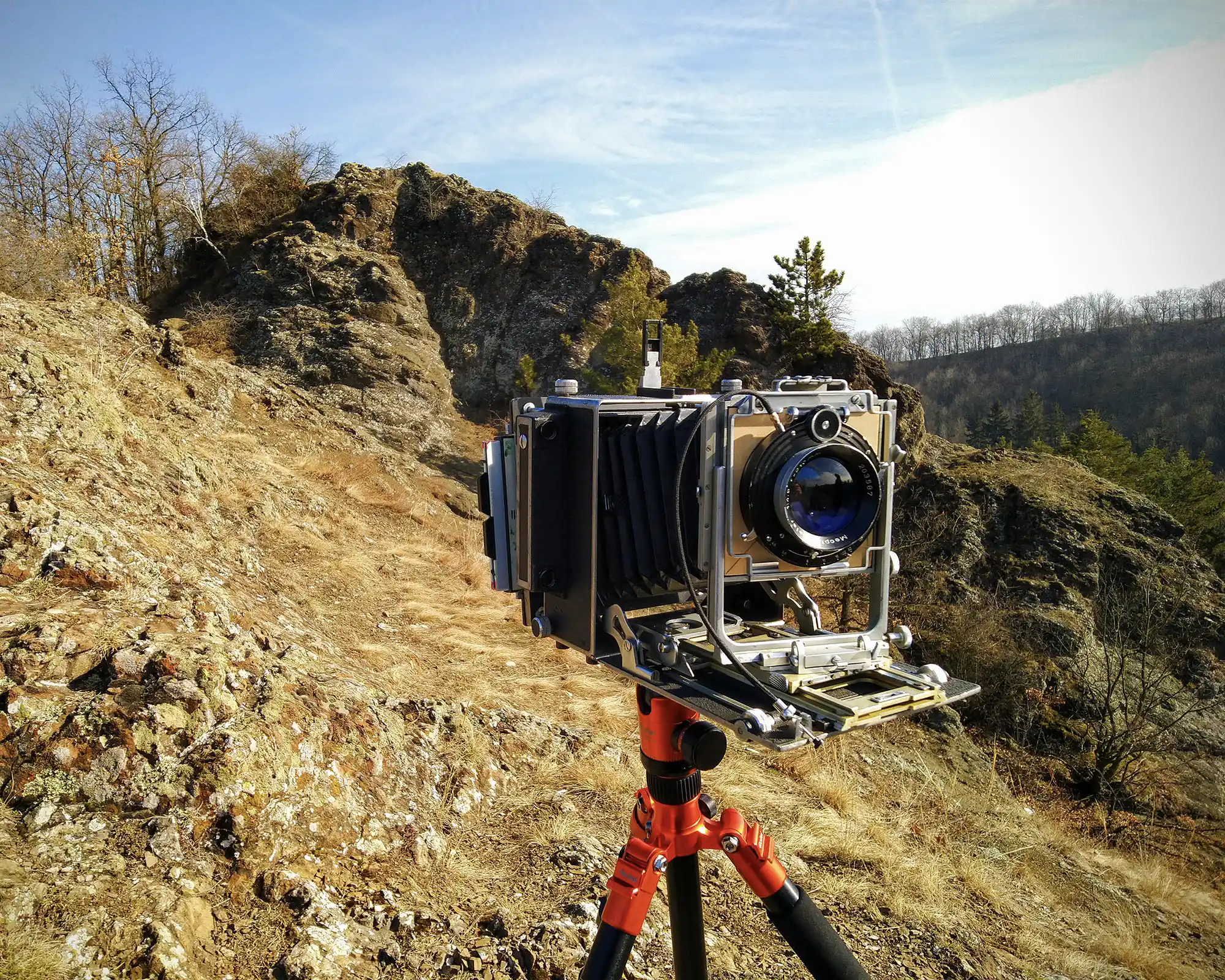
  • M.P.P. mk. VI

    M.P.P. mk. VI

    M.P.P., or Micro Precision Products, was a British manufacturer of optical accessories that dabbled in several related industries.

    • The company was founded as early as 1941 and passed away in 1982, rest in peace (it had a slightly changed name since 1976).
    • As well as large format monorail, field and press cameras not dissimilar to the American Graflex (read previous article!), the company also developed successful medium format cameras, namely the double-eyed Microcords, Microflex etc (the only post-war company in Britain to produce medium format TLRs!). But they also flirted with enlargers, projectors and other related things.
    • TLRs (twin-lens reflex cameras) were also fitted with top-quality optics, e.g. from Ross or Taylor, Taylor & Hobson. Yum yum!

    However, we won't torture the kind reader with the details of the portfolio from this British photographic national treasure and we'll jump to the protagonist of today's article. The Micro Technical Camera is the name of this box, here specifically in the (mark/mk.) VI subtype for 4x5" format that saw the light of day in 1952.

    • There were six types, marked I (1948) - VIII (1963). Versions IV and V were not produced and so these numbers were skipped for some undoubtedly sophisticated reason.

    These were almost certainly the most advanced machines of this type ever produced in the British Isles, boasting, moreover, very good workmanship. Each successive version was an evolution of the previous one, and all had common denominators: light weight, small size and versatility.

    Sample of products of the company

    These versions, unlike their reportage siblings (Micro-Press), did not feature a built-in shutter, thus necessitating the use of lenses with integrated shutters—the consolation being the rather generous hole in the front standard, which could accommodate even the more obese lenses. However, there was no lack of a rangefinder (you'll find out what a rangefinder is from my brilliant description in the previous article) and a flip-up sports viewfinder with a frame at the top. In addition, the rangefinder could be calibrated with small metal slices to different lens focal lenghts—for which there was an indication at the base. A nice little handy detail.

    • The sports viewfinder or sportsfinder is used to quickly frame a scene without having to delay using the optical viewfinder or the waist level finder. The time is selected, the shutter is cocked, pre-focused to infinity and you just blink into the sportsfinder and snap! Some frames and masks even had different focal lengths pre-drawn so you knew exactly what you were aiming at straight away. Quick and efficient. These features made sports viewfinders applicable, now take a breath, when shooting sports.

    Where the mk. dominated, however, were the uncompromising movement options for a folding camera. Apart from the obligatory ones on the front standard, the base could be negatively tilted or the rear section with the bellows additionally extended. This de facto allowed movements even on the rear side or to extend the bellows lift and thus allow the use of longer focal length lenses to satisfy the tastes of portraitists or tele-photographers.

    • The term "movements" means the deflection of the front and rear standards in different directions and angles. Each movement has its own name (tilt, shift, swing, slide, rise, etc.) and serves a different purpose—to correct parallax, vertical lines correction, play with depth of field, focus/defocus only parts of the image, and other nice little thingies. The possibilities are far-reaching, and mastering them will open up whole new universes of photography. The undisputed king of motion are monorail cameras, whose design allows for much more dramatic degrees of movement than field or press cameras. But even these can show off. I recommend a comprehensive and illustrative article here.

    Together with the versatility, the weight (which is around three kilos) and the dimensions, where the camera folds down into an apart square, it is a truly universal and travel-friendly camera (readers with APS-C cameras and similar palm-size funny thingies, please stay calm!). However, I can't fail to mention the solid craftsmanship, consisting mostly of metal—which, besides great durability, also increases the wearer's defensiveness. Thanks to the integrated leather grip, you can stretch out quite solidly and you'll be commanding appropriate respect during evening wanderings through the lands. More advanced warriors can equip themselves with a tripod in their second hand and double their defensive-attack radius. So, good fight and good light!

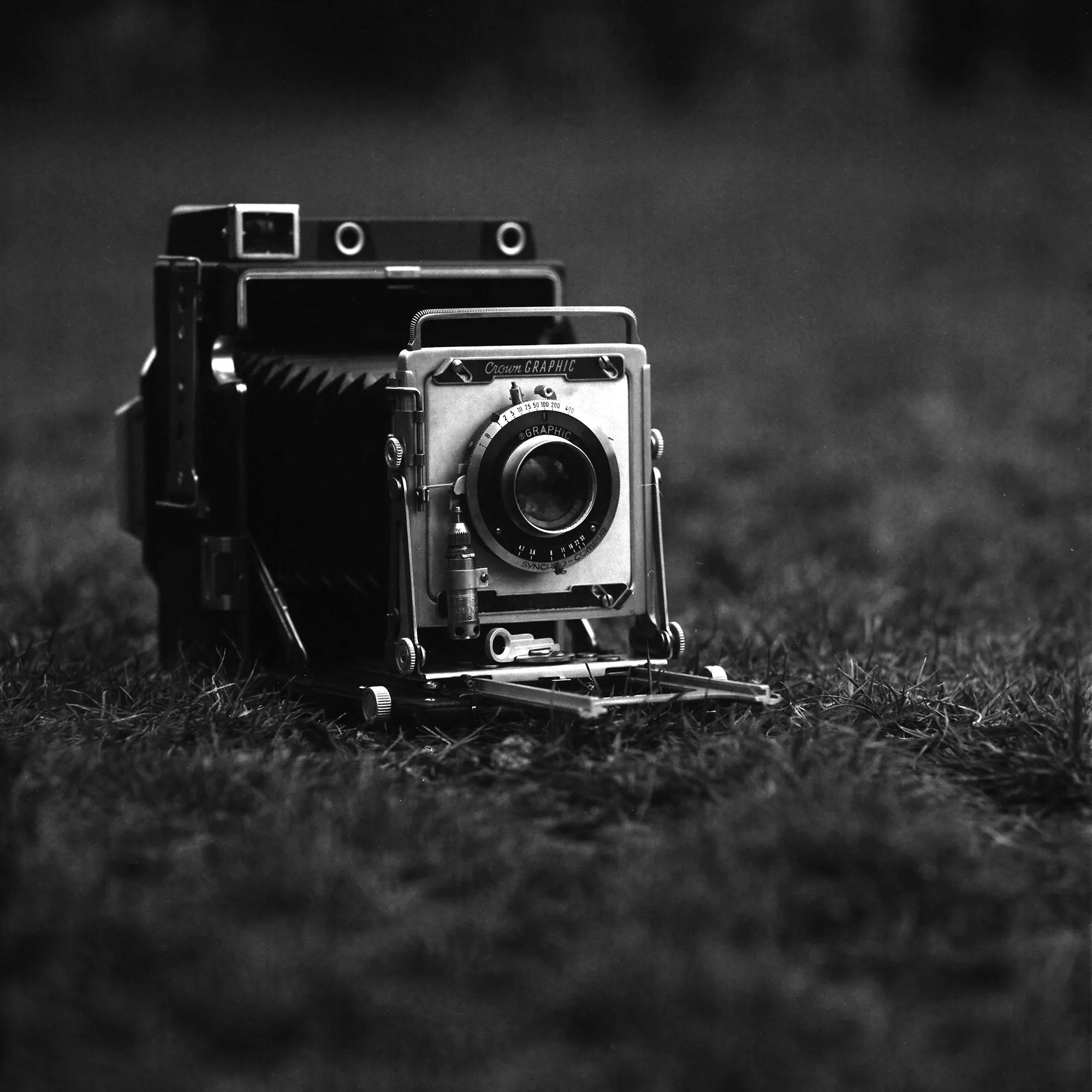
  • Graflex Pacemaker Crown Graphic

    Graflex Pacemaker Crown Graphic

    You're a reporter in the US in the twentieth century and you're wondering what kind of camera you should get. Actually, you don't have to. Graflex. Done, solved.

    Jestli jste neměli v plánu být za pro sebe si mumlající podivíny s potřebou jít vždy proti proudu všeho populárního (zdravím Pentaxisty a svůj odraz v zrcadle), téměř neexistoval důvod pořizovat něco jiného, než Graflex – firmu opanující toto odvětví mezi lety 1912 – 1973.

    • Samotná firma však existuje samozřejmě mnohem déle – datace běží již od l.p. 1887, kdy však byly fotoaparáty zatím spíš jen doplňkovou činností. To se změnilo roku 1909, kdy firmu pohltil behemoth fotografie, Kodak (neplést s medvědem Kodiakem, jak nás bezelstně varuje Wikipedia).
    • Modelů a variant bylo mnoho a ještě více – dokonce i středoformáty, velkoformátové kardany či kinofilmové přístroje – ale ty nikdy nedosáhly takového věhlasu.

    The first time Graflex bared its fangs was before it was eaten by Kodiak, sorry, absorbed by Kodak, with the production of the unique SLR Graflex. It had a folding mirror, you looked into it from above and it looked pretty obscure. However, it had a built-in shutter and you could use almost any lens on it. Quite innovative and decades ahead of its time.

    In 1912, Graflex maxed the volume and the Speed Graphic saw the light of day. The benefits were far-reaching: compact size, low weight, in addition to a ground glass for focusing, a coupled rangefinder, flash compatibility and an internal shutter.

    • Dálkoměr je vehement pro ostření, kdy koukáte do hledáčku s dvěma obrazy toho, co fotíte, a výtahem měchu či otáčením objektivu se obrazy sbíhají a ve chvíli, kdy se překryjí, je zaostřeno (představte si to, jako když šilháte a postupně přestáváte). Rychlé, přesné, efektivní. Používaly se tři typy – Graflex, Kalart a Hugo Meyer.
    • Blesk byl pro novináře esenciální. Dovoloval fotit i za zhoršených světelných podmínek a na rychlé expoziční časy a krom reportérů se uchytil i jinde – u policie. Zvěčňoval mj. místa činu, důkazy či třeba mrtvoly při pitvách.
    • Zabudovaná interní závěrka sestávala z plátna a voliče tenze, kdy se natahováním volilo napětí a tedy rychlost, jakou plátýnko proběhne – tedy expoziční čas. Nejvyšší rychlost byla 1/1000s (slovy – jedna tisícina sekundy!) a do dnešních dob je to na závěrku takových rozměrů nepřekonaná hodnota.
    5×7″ SLR Press Graflex

    Přítomnost zabudované závěrky dovolovala stejně jako u SLR verze nasazení téměř jakéhokoli objektivu (limitováni jste byli pouze rozměry a ohniskem), přesto však vznikaly i verze bez její přítomnosti. Jednalo se třeba o Century Graphic nebo Crown Graphic – jež jsem ve 4×5″ Pacemaker verzi a objektivem Ektar 127mm f4.7 v závěrce vyzkoušel. Jde o stroj, který ve své kategorii téměř nesnese konkurenci, ale nepadli jsem si úplně do oka – je to stroj navržený pro rychlou práci a mému rozvážnému lenochodímu tempu vyhovuje spíše něco jiného. Nicméně dodnes se tyto stroje těší velké oblibě (a také je občas někdo zavraždí a vykuchá z nich integrovanou závěrku, kterou použije jinde – ne že by mne to nikdy nenapadlo, ale zatím jsem nenašel to srdce).

    • Graflex má za svoji bohatou historii za sebou celou řadu zajímavých vynálezů a prvenství – krom Graflox standardu pro uchycení kazet i Grafmatic kazety. Do té jste mohli vložit až šest listových filmů a „přebíjením“ šíbru (kovová planžeta chránící film před osvícením) rychle měnit planfilmy. Výhody jsou nasnadě – taháte jen jednu kazetu místo šesti a výměna vyfocených filmů byla bleskurychlá. Pro novináře skoro otázka života a smrti.
    • In 1977, the first movie in the Star Wars franchise was released and the iconic lightsabers are nothing more than a flash holder from a Graphic camera. The budget wasn't inflatable, so they went hunting in junk shops. When you take pictures with it, you can console yourself with the fact that you're only slightly less cool than Luke Skywalker or Darth Vader. May the Force be with you.
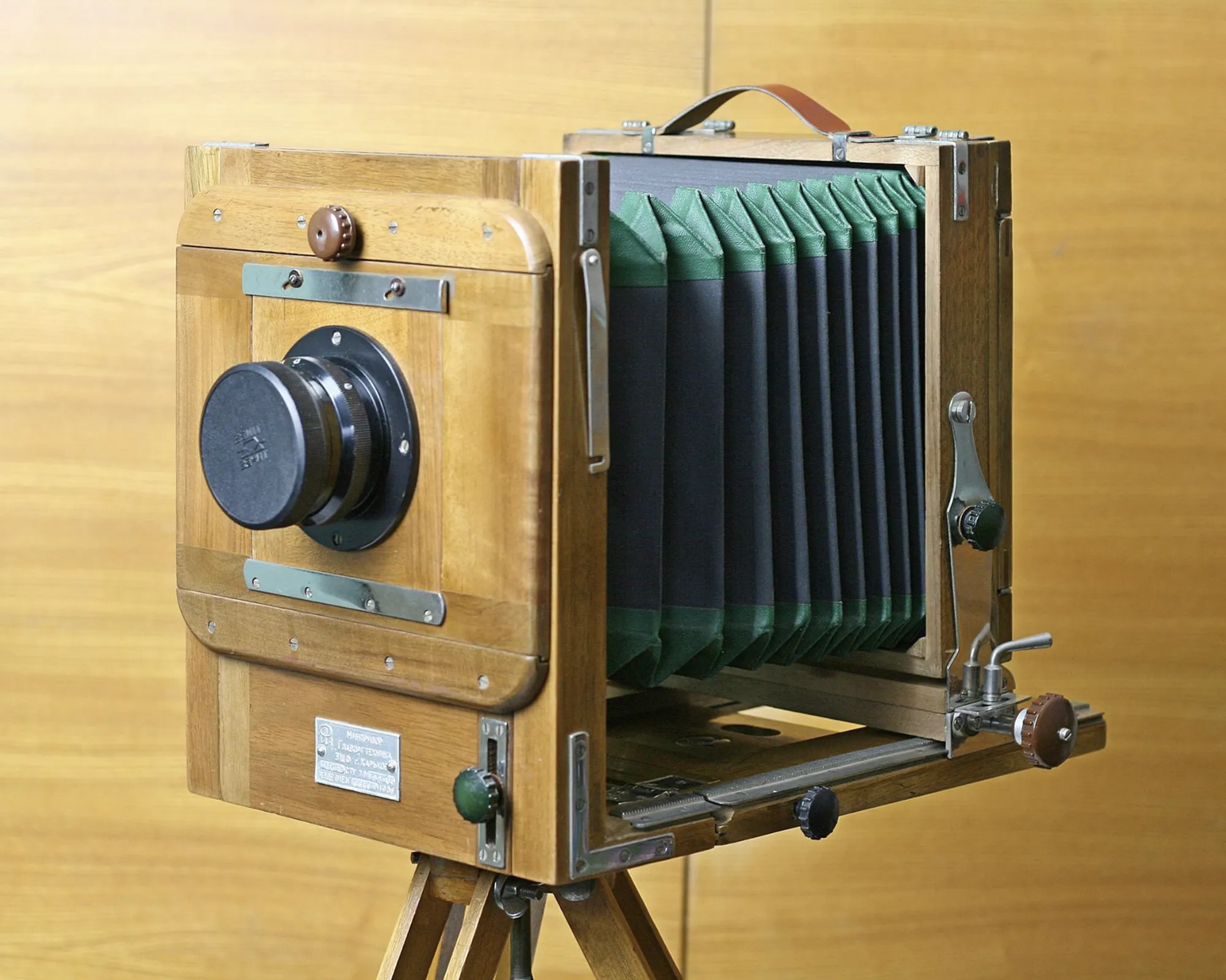
  • FKD

    FKD

    USSR, the land of mud and wooden spoons, spent several decades churning out its one and only line of wooden cameras: the FKD (I could feel it in my bones that this acronym meant something, but I couldn't dig it up. Fucking Klunky Device maybe?).

    • Update: turns out the bones didn't lie. A friend pointed out that it really does stand for something: ФКД—фотокамера дорожная—literally road camera or simply a travel wooden photo brick.
    • The design follows the classic and timeless tradition of German Reisekameras, made since the 1860s, with their final Soviet iteration being the FKD that lasted into the 1980s. They were produced in sizes from 13×18cm up to 30×40cm (the largest, however, wasn't foldable and was labeled FKP/ФКП, intended more for studio or repro work). I could feel it in my bones...

    In any case, this was the magnum opus of Soviet photo-carpentry, fitted with a basic Industar 210mm f4.5 lens—both light and compact enough to actually fulfill the whole "portable" thing. The camera often came with a stylistically matching tripod and film holders, sometimes even a travel case (what the Kharkov factory hath joined together, let no man put asunder!). And like everything Soviet, it was manufactured in the millions, which, compared to other makers, is still pleasantly reflected in the price today.

    Which, unfortunately, is more or less where the positives come to an end. Finding a holder that is light-tight and doesn't leak is not so easy (or "flow," depending on who you ask—both are absurd expressions when it comes to light, but that's just the way we talk in our oh-so-elite circles).

    • Although, why shouldn't light actually flow? There's the photometric quantity of luminous flux (Φ), and what do fluxes do? They flow. Case closed. 
    • As for light blowing into the holders... Maybe if the wind is strong enough it'll blow a few photons into the holder. They're terribly light, after all. They'll stick to the negative and make those little overexposed patches. That's just science.

    The tripod is about as stable as mounting the camera on a puppy with ADHD, and with the camera itself you can't be sure if it was made in millimeters, Viennese ells, Russian versts or just beaten into shape with a rock. The whole contraption shakes like an old drunk, but considering the factories mostly built furniture, and maybe also tractors, tanks, and knitting needles, the result is actually kind of impressive. The camera smells of vodka and when you lift the ground glass to insert the holder, faint strains of The Internationale occasionally drifting from within, lost on the wind.

    Of course, you can always turn it into a lamp or a mushroom incubator, but… that would be a shame. If it doesn't collapse on your way to the field—just like the USSR did—it's actually a fine little box for your first large-format steps, at least in calm weather. It'll teach you what that glass display at the back is for and why everything on it is upside down, where to stick that oversized SD card and what the accordion in the middle is supposed to do. A sophisticated, precise machine full of possibilities would almost be wasted on a beginner, but this humble wooden cube will patiently walk you through the basics, serving as a kind of splinter-ridden mentor. Wonder, laughter, and a few slivers in your hands are guaranteed—and that's why I remember it fondly. My first large format. Thanks, FKD.